

History of the 169th Air Defense Squadron
The Mount Kaala radar facility and the Wheeler AFB operational facility were completed and being tested at the end ol lhe fiscal year. This new radar complex which is to be operated by the 169th ACW Sq (F), will enhance air defense capabilities. The Mount Kaala radar facility is a FAA/ HANG joint-use facility; maintenance responsibility of the prime search radar is vested in the FAA with HANG providing Air Technicians to adequately man two shifts. The remainint electronic equipment is maintained solely by the HANG. The radar information from Mount Kaala is remotcd via a microwave radio system to the Wheeler AFB operational facility for use by the 169th ACW Sq (F) Direction Center.
– 1965 Annual Report pp. 9
169th AIRCRAFT CONTIIOL AND WARNING SQUADRON (Fixed)
The 169th ACW Sq (F) maintained its 24-hour surveillance at the Koko Crater AFS, Oahu, as one of two units providing air defense in Hawaii.
The squadron participated in various types of training exercises under the supervision of the Hawaiian Air Defense Division. These included four JTF 119 Exercises which involved recall-mobilization type of training, utilizing the full scope of the existing operations plans and 58 Team Training Exercises – which consisted of “faker,, aircraft penetrating the Hawaii Air Defense System. There were also 122 System Training Missions, a synthetic training device simulating the actual live type exercises.
The 169th ACW Sq (F) maintained its excellent SKT passing rate of 90% for all levels with continued emphasis given to On-the-Job Training. During the reporting period, 43 personnel were tested and 39 passed. In addition, General Military Training was conducted on a continuing basis.
The station detected and plotted 38,762 tracks, conducted 3,911 intercepts, provided four emergency assists and three navigational assists.
– 1965 Annual Report pp. 11

On 2 July 1965, the Mount Kaala/ Building 204 facility was officially dedicated. The 169th ACW Sq phased out its operation from Koko Crater AFS and began operation from the new facilities. Today, the radar at Mount Kaala provides radar information to both the Federal Aviation Agency and to the Hawaii Air National Guard.
– 1966 Annual Report pp. 9
The 109th ACW Sq changed station from Punamano AFS to Koko Crater AFS, and 169th ACW Sq changed station from Koko Crater AFS to Mount Kaala Complex effective 1 Jul 1965. (See pIate II-Section List of Units).
– 1966 Annual Report pp. 9
169th AIRCRAFT CONTROL AND WARNING SQUADRON (Fixed)
The 169th ACW Sg (F) aGivatcd the Mount Kaala Wheeler AFB Complex on 1 July 1965. Previously, the 169th ACWS Sq was locatcd at Koko Crater AFS. This new complex has given tbe Unit a much greater operational capabilicy.
An operational readines inspetion was administered by PACAf quring The period 20-28 June 1966, and this orginization was rated satisfactory. In addition, PACAf Standarization and Evaluation Team visits were most beneficial to our radar operations section during the year.
As in previous years U.S. Navy intercept Controllers cross-rrained at this unit’s Air Defense Direction Center and the required live and simulated imercept training. An dfor the first time, besides acquiring (Dining mentioned above, the U.S. Navy conducted a one week requalification course for Navy controllers who had lost their currency rating as an lnrercepr Controller.
The numher of training exercies remained the same as the previous fiscal year with torals as follows: (1) Division wide exercises-59; (2) System Tra ining Missions- ll). In addition, 43,43t tracks were pIonted, 4,185 intercepts; were conducted, 12 navigational assists were given.
During the months of September and Ocrober 1965, tbe radar set AN/Ff S-7, a joint· use radar with the Federal Aviation Agency a Mount Kaala, underwenr a major ltenna modification. The seven beam configuration was changed ro tim of a single beam. This modification, provided by the FAA, made the radar capable of providing two· channels, which makes the set more reliable for operational
– 1966 Annual Report pp. 11
169th AIRCRAFT CONTROL AND WARNING SQUADRON (Fixed)
The 169th ACW Sq continued to operate the Mount Kaala/Wheeler AFB Complex during Fiscal Year 1%7. The new complex has increased the potential of the squadron to the highest degree of operational capability. The operational capability, reflected by a realistic index, is considered one of the highest in the Air National Guard’s aircraft control and warning system.
An operational readiness inspection was administered by PACAF during the period 20-26 May 1967, and this organization was rated satisfactory. Also, during this period, the PACAF Standardization and Evaluation Team visited the unit. Thorough evaluation of the Radar Operations Section was made, particularly in problem areas reported in the previous report and publications. The team rated the 169th ACW Sq satisfactory. One weapons controller and one weapons technician were evaluated to upgrade their skill qualification to “Expert.” They were successful in their evaluation. Consequently, the 169th ACW Sq is the only unit with eight “Expert’ Controllers in the PACAF area.
The U. S. Navy Intercept Controllers enroute to the South East Asia operations, cross-trained at this unit’s air defense direction center and performed the required refresher training.
The 169th ACW Sq, in conjunction with PACAF, hosted the first anti-jam operations (AJO) course in the Hawaii Air Defense System. The course, which was a week long, was attended by the representatives of 326th Air Division, the Hawaii Air National Guard, the Hawaii Army National Guard, Federal Aviation Administration, U.S. Navy and U.S. Marine Corps.
The number of training exercises conducted during the fiscal year were as follows: 1) Division-wide exercises54; 2) System Training Missions-122. In addition, 52,510 tracks were plotted, 6,342 intercepts were conducted, 12 navigational assists were accomplished, and one emergency assist was given. The volume in the tracks plotted increased 21% while the total number intercepts increased over 50% from the last fiscal year.
The Radar Set AN/FPS-7, a joint-use search radar with the Federal Aviation Administration at Mount Kaala maintained an average operational rate of 98.8% during the fiscal year, whereas, the average operational rate for the Radar Set AN/FPS-6E, Height Finder, maintained 95.6%. In August 1966, the height finder had an extensive antenna modification from the electrical elevation nod system to the hydraulic nod system.
During the fiscal year, a cost reduction program was initiated in the communications-electronics area. A savings of approximately $6,000 had been realized due to reduction of tools in each technician’s kit and better utilization of hand tools under centralized bench work use.
Greater emphasis was placed on training. As a result, 29 airmen personnel were upgraded in skill level. Average for passing the SKTs for 3 level, 85.7%; 5 level, 64.2%; and 7 level, 71.4%.
The 169th ACW Sq maintained its drill attendance average of 96.9% for the fiscal year.
– 1967 Annual Report pp. 10

Also effective 1 January 1968, the 150th and 169th ACW Sqs were reorganized. . .The resultant authorized strength for the 169th ACW Sq was 37 officers and 198 airmen, representing an increase of 11 officers and 12 airmen
– 1968 Annual Report pp. 14
169th AIRCRAFT CONTROL AND WARNING SQUADRON (Fixed)
The 169th ACW Sq continued to operate the Mount Kaala j Wheeler AFB facility during Fiscal Year 1968. This unit maintained one of the highest operational capability indexs during the fiscal year when compared with other Air National Guard’s Aircraft Control and Warning units.
A general inspection of the unit was conducted bv the PACAF IG Inspection T eam from 1 M ay through 17 ‘May 1968: The 169.th ACW Sq was performing its assigned missIon 111 a sa tlsfactory manner.
The 169th ACW Sq maintained around-the-clock air defense posture as in the past years. The unit’s Air Defense Direc tion Center recorded a total of 60,164 tracks, 5,887 inter(,epts (46 actual and with 5,841 training); provided 8 emergency assists, 12 navigational assistance; and afforded 97 fligh t follows. Traini ng exercises conducted during the fis(,a l year were as follows: Division wide exercises 51: System Training Missions 138.
In addition to the normal day to day activity of maintaining Air Defense Direction Center functions, the 169th ACW Sq facilities were made available to U.S. Navy Weapons Controllers requiring training to maintain their combat readiness status. The 169th ACW Sq inaugurated the first PACAF approved Weapons Controller Requalification Course on 25 March 1968. Students were assigned from the with Tactical Control Group to the 169th ACW Sq for thirty days so that they would become operationally ready. Three classes of 12 officers completed the course by 30 .June 1968, with one rated Expert, 6 Skilled and 5 Qualified. These Weapons Controllers have returned to their parent organization at Clark Air Base, P. 1., with the possibility of further deployment to South East Asia operatiOns. It is felt that the efforts devoted to the PACAF Weapons Controllers Requalification Course by the Hawaii Air National Guard is a small but very worthwhile contriblltion to the SEA operations.
The Radar Set AN / FPS-7, a joint-use search radar with the Federal Aviation Administration at Mount Kaala maintained an average operational rate of 98.4% and the average operational rate of the Radar Set AN / FPS-6E, Height Finder, \,as 96.0’jr during the fiscal year. No major modifications to equipment were required and no major equipment difficulties; were encountered during; the reporting period.
– 1968 Annual Report pp. 15
169th AIRCRAFT CONTROL AND WARNING SQUADRON (Fixed)
The 169th ACW Sq continued to provide the capability for the mission of the Hawaiian Air Defense System from the Mount Kaala/Wheeler Air Force Base (AFB) facility during FY 1969. The basic electronic equipment, such as search and height finder radars, and air-ground ultra high frequency (UHF) radios are located at Mount Kaala with the operational, administrative and support functions located at Wheeler AFB.
The squadron’s operational activity during the fiscal year recorded 62,957 aircraft tracks, conducted 5,740 intercepts of which 38 were actuals for identification purposes. In addition, this squadron provided eight emergency assists to aircraft for navigational assistance and 715 for aircraft radar flight monitoring.
In order that the unit could maintain its proficiency, there was a total of 32 division-wide exercises, which included Team Training exercises and Joint Task Force 119 Exercises. In addition, there was a total of 108 System Training Missions, which were exercises with simulated and synthetic targets to train site or division-wide req uirements.
The U.s. Navy Pearl Harbor based intercept controllers continued to utilize this unit’s ADDC on a regular basis to perform required live and simulated intercepts. During the period when the aircraft carrier USS Enterprise was at Pearl Harbor because of major repairs, the 169th AC\V Sq assisted the intercept controllers from the carrier in maintaining weapons controller proficiency.
Also, during FY 1969, the squadron continued to conduct the PACAF Weapons Controller Requalification Course. Six classes were conducted during the fiscal Year, and 21 graduated as qualified weapons controllers.
The radar set A W /FPS-7D, a joint-use search radar set with the FAA at Mount Kaala, maintained an operational rate of 99.0)'( during the fiscal year. The radar set A:\/FPS-6E height finder maintained 96.0% opcrational rate for air defense purposes.
An operational readiness inspection was conducted by the PACAF Inspector General (IG) Team from 17 May thru 27 Mav 1969. Concurrentlv, an administrative inspection of the’ squadron was con’ducted by the team. The PACAF IG Team stated that the 169th ACW Sq was performing its assigned duty in a satisfactory and capable manner.
– 1969 Annual Report pp. 15-16
169TH AIRCRAFT CONTROL AND WARNING SQUADRON (FIXED)
The 169 AC&W Squadron continued to provide the capability for the Hawaiian Air Defense System to accomplish its assigned mission from the Mount Kaala/Wheeler AFB facility during Fiscal Year 1970. The search and height-finder radars and the air-ground UHF radios are located at Mount Kaala with the operational, administrative and support functional areas located at Wheeler AFB.
The Squadron’s operational activity during the fiscal year recorded 65,002 aircraft tracks and conducted 10,354 intercepts, of which 12 were actuals for identification purposes. In addition, this squadron provided emergency navigational assists to seven aircraft and radar flight monitoring of 651 aircraft.
In order for the unit to maintain its proficiency at all times, 39 division-wide exercises were scheduled, including Team Training exercises and Joint Task Force 119 Exercises. In addition, there was a total of 135 System Training Missions, which were exercises with stimulated situations and synthetic targets to meet squadron or division-wide requirements.
Besides performing round-the-clock air defense missions for the State of Hawaii, the 169 AC&W Squadron continued to expand its assistance program to active service units. U.S. Navy Pearl Harbor-based intercept controllers continued to utilize the unit’s Air Defense Direction Center (ADDC) on a regular basis to perform live and simulated intercepts required to maintain their combat-ready status.
The previously reported PACAF-approved Weapons Controller Requalification Course funetioned for the past year. A total of 35 student officers from the 5th Tactical Control Group attended the unit’s school to acquire and/or maintain their operational-ready status. (Results: 4 Skilled, 31 Qualified.) These students accumulated 4,360 live intercepts, 2,807 simulated intercepts, and 360 hours of academic training . There have been many good reports from the field on the results of the HANG efforts devoted to this course. PACAF has recognized this and decided to continue the requalification course indefinitely.
The Radar Set AN /FPS-7D, a join t-use search radar set with the Federal Aviation Administration at Mount Kaala, maintained an operati onal rate of 99.1 percent during the fiscal year. The Radar Set AN/FPS-6E, height finder, ma intained 96.9 percent operational rate for air defense purposes.
During the fiscal year, the AN/GPX- 18A was replaced by the AN/GPS-78 , a modern solid-state set. Further, installation of the inter-island microwave communication link between Kokee, Kaua i, and Mount Kaala was initiated by Collins Radio Corporation. Comp letion of this system is scheduled for Fiscal Year 1971.
– 1970 Annual Report pp. 154-15
Height finder radars at the 150th Aircraft Control and Warning Squadron on Kauai, and the 169th Aircraft Control and Warning Squadron on Mount Kaala, Oahu, were modified to incorporate Electronic Counter-Counter Measure (ECCM) features. This modification increased their capability to detect aircraft under electronic jamming conditions.
Construction of a new height finder radar facility at Mount Kaala began in June 1970. The radar should become operational in FY 4/72.
– 1971 Annual Report pp. 15
169th Aircraft Control and Warning Squadron (Fixed)
The 169th ACW Squadron continued to maintain its capability of providing surveillance for the Hawaiian Air Defense System from the Mount Kaala/Wheeler AFB facility during FY 71. The search and height finder radars and the air/ground UHF radios are located at Mount Kaala while the operational, administrative, and support functional areas are located at Wheeler AFB.
The squadron’s operational activity during the fiscal year included handling of 60,787 aircraft tracks and conduct of 5,309 intercepts. Fourteen were actual intercepts for identification purposes. In addition, the 169th provided emergency navigational assistance to nine aircraft and monitored 562 aircraft on radar.
In order for the squadron to maintain a high degree of aircraft control and warning proficiency, fifty-eight air defense exercises were conducted. Of these, 44 were team training exercises, two were JTF 119 exercises, eight were control phase exercises and one was an ORI exercise. Additionally, 161 system training missions (synthetic target exercises) were performed to further maintain unit and system air defense proficiency.
In addition to performing the active air defense mission, the 169th ACW Squadron continued its assistance programs for active service units. Pearl Harbor based Navy intercept controllers used the unit’s Air Defense Direction Center facilities on a scheduled basis to maintain their combat ready status. They conducted 731 training intercepts in this capacity.
The unit’s PACAF Weapons Controller Requalification Course enjoyed another successful year. Thirty-six student officers (22 from 5th Tac Con Gp, 13 from 623d ACW Sq, and one from 34 7th TFW ) were enrolled in nine unit-conducted classes. They acquired and j or maintained their required combat readiness status by attending the course. The tactical evaluations resulted in the awarding of 6 skilled and 30 qualified ratings. The students participated in 3,393 live intercepts, 3,524 simulated intercepts, and 360 hours of formal academic instruction. Additionally, two Weapons T echnicians (enlisted personnel ) from the 5th Tac Con Gp were trained and awarded expert and qualified ratings, respectively. There have been favorable reports from the fi eld about the HANG course. PACAF has recognized its value and decided to continue the course indefini tell”
The 169th ACW Sq was presented the CEM Distinguished Unit Plaque at the 92d General Conference of the National Guard Associa tion of the United States in NevI’ York City.
The ANj FPS-7D radar set, a joint-use search radar shared with the Federal Aviation Administration (FAA) at Mt Kaala, maintained an operational rate of 97.76%. The radar set, A ‘ ; FPS-6J, height finder, maintained an 80.76 operational rate for air defense purposes.
The installation of an AN jU PX -14; beacon system was completed and the system was accepted for air traffic control use by the FAA. The Mt Kaala facility was repaired and painted under an $80,000 contract let by the Hickam Air Force Base Civil Engineers.
– 1971 Annual Report pp. 16
169th Aircraft Control and Warning Squadron (Fixed); The 169th ACW Squadron continued to perform its air defense mission from the Mount Kaala / Wheeler AFB complex in a highly professional manner. The search and height finder radar and the air/ground radio sets are located at Mount Kaala while the operational, administrative, and support functional areas are located at Wheeler AFB.
The Squadron operational activity recorded a total of 60,489 aircraft tracks and conducted 5,967 intercepts. Four of these intercepts were “actuals” for identification purposes. Three aircraft were given emergency and navigational assistance, and 376 aircraft flights were monitored on radar.
The l69th ACW Sq uadron participated in 12 team training exercises, I Joint Task Force (JTF) 119 exercise and I operational readiness inspection exercise during the fiscal year. Additionally, 137 system training mission (STM’s) were performed to supplement unit and system air defense proficiency training.
In addition to fulfilling its active air defense mission, the 169th ACW Squadron continued to provide assistance for the active services. U.S. Navy weapons controllers assigned to Pearl Harbor used the unit’s ADDC facilities on a scheduled basis to maintain their combat ready status. They were able to perform 713 training intercepts during the fiscal year.
The 169th continued to conduct the PACAF weapons controller requalification course. Thirty-two USAF student officers completed the course during the year. They either acquired and/ or maintained required combat ready status while on temporary duty status with the 169th ACW Squadron. The tactical evaluations resulted in the awarding of 9 “skilled” and 32 “qualified” combat readiness ratings. The student weapons controllers conducted 3,267 live intercepts, 4,417 simulated intercepts, and received 360 hours of formal academic instruction.
The AN/ FPS-7D radar set, a joint-use search radar shared with the Federal Aviation Administration (FAA) at Mount Kaala, maintained an operational rate of 98.43 per cent. The AN/FPS-6J height finder maintained an operational rate of 94.46 per cent. Due to the high reliability of this radar set, it increased its operational rate by 14 per cen t from the previous fiscal year.
Major Donald M. O’Day, weapons director staff officer, received the Hawaii National Guard Medal for Merit; and Captain Melvin C. Morris, communicationselectronics maintenance officer, received the Hawaii National Guard Commendation Medal. They rece ived the awards for their outstanding contributions to the Hawaii National Guard.
– 1972 Annual Report pp. 16
169TH AIRCRAFT CONTROL AND WARNING SQUADRON (FIXED)
The 169th ACW Squadron continued to perform its air defense mission in a highly professional manner with the search and height finder radars and the air/ground radio sets located at Mount Kaala and the operational, administrative and support functional areas located at Wheeler AFB.
The radar operations section detected 61,326 inbound aircraft and conducted 7,053 intercepts. Of these, 2 were actual intercepts for identification purposes. Additionally, 8 aircraft were given emergency assistance, 5 were given navigational assistance, and 530 were provided radar flight monitoring.
There were 18 air defense exercises conducted to maintain proficiency. Of these, 12 were team trammg exercises, 2 were JTF 119 exercises, and 4 were expanded air defense exercises. Also, 102 system training missions (synthetic target exercises) were performed to supplement unit and system air defense proficiency training.
Besides performing the active air defense mission, the 169th ACW Squadron continued its assistance programs for active service units. Pearl Harbor based U.S. Navy air intercept controllers used the unit’s Air Defense Direction Center (ADDC) on a regular scheduled basis to maintain their combat readiness status. Thev conducted 1,082 training intercepts. During the mo~th of September, support was provided to RIMPAC 72, a multinational naval exercise conducted by the U.S. Navy. The unit’s PACAF Weapons Controiler Requalification Course enjoyed another successful year. Twenty-six student officers acquired and/or maintained their required combat readiness status. Tactical evaluations resulted in the award of 11 “skilled” and 15 “qualified” combat readiness ratings. The students performed 2,717 live intercepts, 3,499 simulated intercepts, and received 360 hours of formal academic instruction.
The AN/FPS-7D radar set, a search radar at Mount Kaala, shared with’the Federal Aviation Administration, maintained an operational rate of 99.3 percent, an increase of 0.87 percent from the last report. The AT\/FPS-6J height finder radar maintained an operational rate of 96.0 percent, an increase of 1.54 percent from the last report.
During this reporting period, the installation of the AN/GPA-125 electronic aircraft identification equipment was completed. This system was re-engineered and installed using existing microwave equipment and was accepted for operational use in March, 1973. In addition, the installation of the microwave repeater at Mount Kaala for use by the Air Force was completed.
During the fiscal year, Captain Roy D. Mendes was presented the HNG Medal for Merit and :Vfajor Edward K. Lee, the HNG Commendation Medal upon their retirement from the HANG. SMSgt Harold K. Abe was presented the HT\ G Commendation Medal for outstanding achievement, and CMSgt Richard Senaha received the HNG NCO Association’s award as the Outstanding HANG Airman for 1972.
– 1973 Annual Report pp. 15-16
Effective on July I, 1973, the 150th and 169th Aircraft Control and Warning (ACW) Squadrons were also reorganized with no change in mission, location, or gaining command. . . The authorized strength for the 169th ACW Squadron was reduced from 235 to 180 (28 officers and 152 airmen).
– 1974 Annual Report pp. 15
The AN f FPS-7D search radar at the 169th ACW Squadron, Mount Kaala AFS, was modified to improve the operational recovery time after electrical power nuctuations and interruptions of less than 30 seconds. This modification improved the operational readiness of the search radar which is used for HANG’s active air defense mission and for the air traffic control mission of the Federal Aviation Administration,
The AN/GPA-I22 Coder-Decoder Group was installed at both aircraft control and warning squadrons during the fiscal year. This equipment increases the units’ capability to identify friendly aircraft and also provides them with altitude information about airborne targets.
– 1974 Annual Report pp. 16
169th Aircraft Control and Warning Squadron (Fixed)
The 169th ACW Squadron continued to perform its air defense mission in a highly professional manner. The search and height finder radars and the air to ground radio sets are located at Mount Kaala while the operational, administrative, and support functional areas are located at Wheeler Air Force Base.
On November 19, 1973, the 169th ACW Squadron was inspected by the inspector general, Headquarters, Pacific Air Forces. A rating of satisfactory was awarded. The inspection consisted of an operational readiness Ins pection and a concurrent management effectiveness inspection.
The radar operations section detected 56, 159 inbound aircraft and conducted 6,785 intercepts. Five of these were actual intercepts for identification purposes. Additionally, 5 aircraft were given emergency assistance, I was given navigational assistance, and 456 were provid ed with radar Oight following.
During the fiscal year, 15 air defense exercises were conducted in order to maintain aircraft control and warning proficiency. Of these, 10 were team training exercises, 2 were Joint Task Force 119 exercises, and 3 were expanded air defense exercises. Also, 159 system training missions (synthetic target exercises) were run to suppkrnent unit and system air defense proficiency training.
In addition to performing the active air defense mission, the 169th ACW Squadron continued its assistance to the active military services. Pearl Harbor based U.S. Navy air intercept co ntrollers used the unit’s Air Defense Direction Center (ADDC) facilities on a regularly scheduled basis to maintain their combat ready status. They conducted 986 training intercepts. During the month of September, facility support was provided to RIMPAC 73, a multi-nation naval exercise conducted by the U.S. Navy.
– 1974 Annual Report pp. 18
New UHF air/ground radios (AN/GRT-22 and AN/GRR-24) were installed in January 1975 at the 150th ACW Squadron . Kokee AFS, and at the 169th ACW Squadron, Mt. Kaala, by the 130th Electronics Installation Squadron (ANG) from Salt Lake City, Utah. These radios , part of the United States Air Force Rivet Switch program, improve the availability of frequencies within the VHFUHF spectrum by reduci ng the bandwidth from 100 kHz to 50 kHz. Featuring transistors and integrated circuits , this equipment will increase reliability and improve maintenance.
– 1975 Annual Report pp. 16
169th Aircraft Control and Warning Squadron (Fixed)
The 169th ACW Squadron continued to successfully maintain its air defense posture. The search and height finder radars and the air/ground radio sets are located at Mt. Kaala while the operational, administrative, and support functional areas are located at Wheeler AFB. The year was highlighted by a satisfactory performance on an operational readiness/management effectiveness inspection conducted by the Inspector General, Headquarters Pacific Air Forces, in April 1975.
The radar operations section detected 55,436 inbound aircraft and conducted 6,015 intercepts. Six of these were actual intercepts for identification purposes. Additionally, 4 aircraft were given emergency assistance, 1 was given navigational assistance, and 507 were provided radar flight following.
During the fiscal year, 8 air defense exercises were conducted in order to maintain aircraft control and warning proficiency. Of these, there were 3 team training exercises, 2 Joint Task Force 119 exercises, and 3 expanded air defense exercises. In addition, 95 System Training Missions (synthetic target exercises) were performed to supplement unit and system air defense proficiency training.
Besides performing the active air defense mission, the 169th ACW Squadron continued its assistance programs for the active service units. Pearl Harbor based U.S. Navy air intercept controller$ used the unit’s air defense direction center (ADDC) facilities on a regularly scheduled basis to maintain their combat ready status. They conducted 1,818 training intercepts. During the month of March, facility support was provided to RIMPAC. The unit’s Pacific Air Forces Weapons ContrOller Requalification Course enjoyed another successful year. Twenty-two student officers enrolled in nine unit conducted classes acquired and/or maintained their required combat readiness status. Tactical evaluations resulted in the award of one “skilled” and 21 “qualified” combat readiness ratings. These students accumulated 2,079 live intercepts, 3,464 simulated intercepts, and 360 hours of formal academic instructions. The ADDC also regularly provided intercept control and flight following for Kaneohe based Marine F-4J attack aircraft.
From April 16 through June 24, this unit actively supported Exercise Cope Elite. This was a Joint Chiefs of Staff coordinated, Commander-in-Chief Pacific sponsored, joint exercise conducted in support of the U.S. Army’s Exercise Opportune Journey. This unit performed in the role of a Control and Reporting Center (CRC) within a Tactical Air Control System by providing radar control of A-7D aircraft from Barbers Point to Pohakuloa Training Area to provide Hawaii based U.S. Army with realistic Close Air Support training.
The AN/FPS-7D radar set, a search radar which is shared with the Federal Aviation Administration (FAA) at Mt. Kaala, mai ntained an operational rate of 97.7 percent. The AN/FPS-6J and the AN/FPS-90 height finder radars maintained an operational rate of 95.1 percent and 88.2 percent respectively.
The installation of the microwave remoting equipment for the AN/FPS-90 radar was completed. The radar was commissioned in August 1974. As a result of the AN/FPS-90 commissioning, a completed station evaluation was conducted by the 4754th Radar Evaluation Squadron in November 1974. All systems were found to be fully operational.
In January 1975, the unit’s air-to-ground radio facility was completely reaccomplished under project Rivet Switch. 100 kHz radio equipment were replaced with new 50 kHz radio equipment. Also, during the year, a comprehensive study was jointly (FAA/HANG) conducted on the HANG inter-island microwave system to determine if the microwave antenna on the 180 foot steel tower at Mt. Kaala could be relocated to a lower level. The study proved encouraging and corrective action is being initiated.
During the fiscal year, Technical Sergeant Seiichi Tsutsui was awarded the Hawaii National Guard Commendation Medal for outstanding performance of duty with the PACAF Weapons Controller Requalification Course and Technical Sergeant Theodore A. Outram, Jr. was recognized as the Outstanding Air Guardsman by the Hawaii National Guard Enlisted Association.
– 1975 Annual Report pp. 18
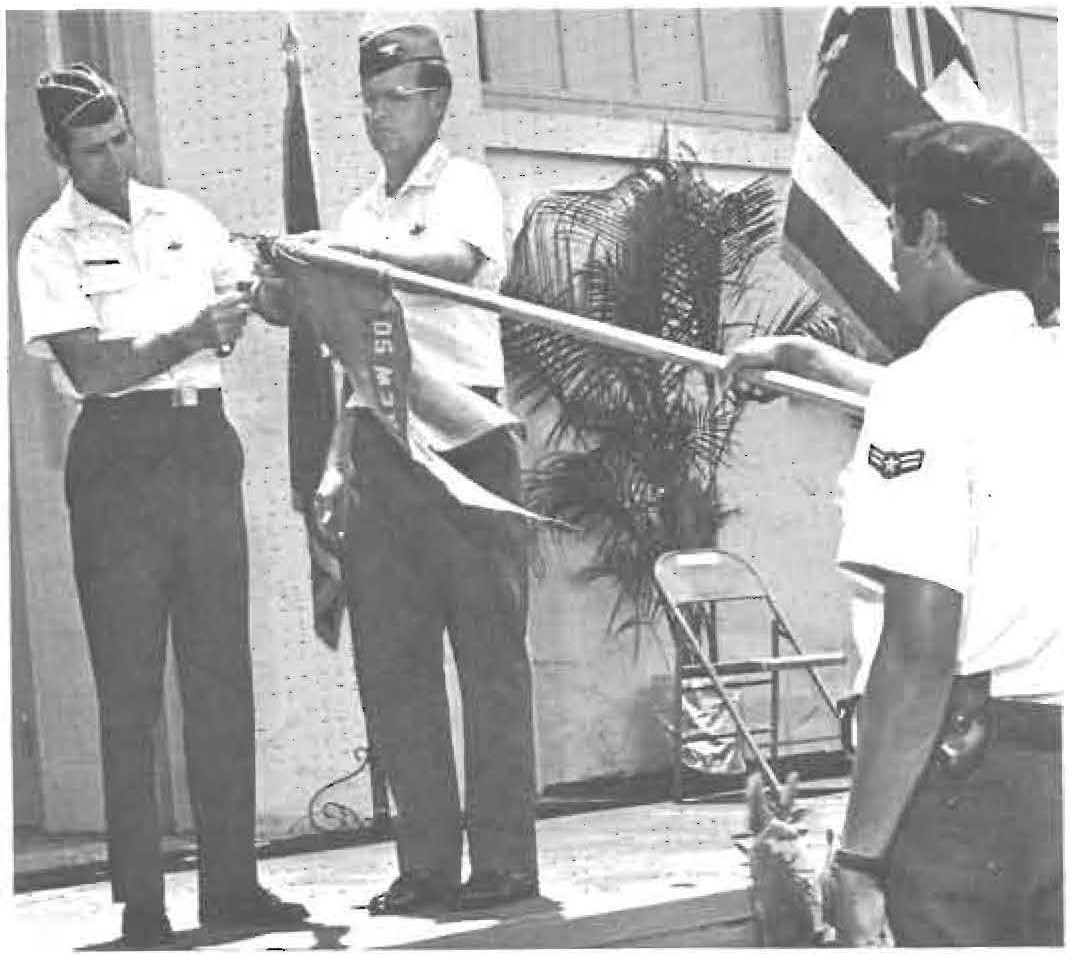
On Sept. 23, the 169th Aircraft Control and Warning Squadron (ACW Sq) received the CommunicationsElectronics Trophy for being the outstanding communications-electronics unit during the previous fiscal year. In addition, in May 1976 Pacific Air Forces (PACAF) presented the 169th ACW Sq w ith the Air Force Outstanding Unit Award for exceptionally meritorious service.
– 1976 Annual Report pp. 4
169th Aircraft Control and Warning Squadron The 169th ACW Sq continued to successfully maintain a high state of air defense readiness from its Mount Kaala/Wheeler AFB complex. It maintained search and height finder radars and air/ground radios at Mount Kaala AFS and operational , administrative, and support functions at Wheeler AFB.
The year was highlighted by the presentation of the Air Force Outstanding Unit Award to this organization for exceptionally meritorious service performed in the operation of the PACAF Weapons Controller Requalification Course from July 1, 1973 to June 30, 1975. On Sept. 23, 1975, the unit was presented the CommunicationsElectronics Trophy at the 97th General Conference of the National Guard Association of the United States in Seattle, Washington.
The radar operations section detected 53,410 inbound aircraft and conducted 4,147 Intercepts. Four of these were actual intercepts for identification purposes. Additionally, 1 aircraft was given emergency assistance, 1 was given navigational assistance, and 754 were provided radar following assistance.
Besides performing the active air defense mission, the 169th ACW Sq continued its assistance programs for the active service units. Pearl Harbor-based U.S Navyair intercept controllers used the unit’s ADDC facilities on a regularly scheduled basis to maintain their combat ready status. They conducted 1,119 tra ining intercepts. The ADDC also provided intercept control and fl ight followi ng for Kaneohe-based Marine F-4J attack aircraft. Unit weapons controllers conducted a total of 676 intercepts.
The 169th ACW Sq continued to operate the PACAF Weapons Controllers Requalification Course in an outstanding manner until its termination on Dec. 15, 1975. Nine students (USAF officers) enrolled in four unitconducted classes , acquired and/or maintained their required combat readiness status. Tactical evaluations resulted in the award of one skil led and eight qualified combat readiness ratings. These students accumulated 742 li ve intercepts, 1,299 simu lated intercepts, and 160 hours of formal academic instruction.
Continued active support for Exercise COPE ELITE was provided by the unit duri ng the periods Sept. 15-Dec. 1, 1975 and March 15-May 27, 1976. COPE ELITE was a Joint Chiefs of Staff coordinated and Commander-inChief Pacific sponsored joint exercise conducted in support of the U.S. Army’s exercise OPPORTUNE JOURNEY. The 169th ACW Sq. performed in the role of a control and reporting center within a tactical air control system by providing radar control of tactical fighter aircraft from Barbers Point, Oahu, to the Pohakuloa Training Area, Hawaii. The exercise provided Hawaii-based U.S. Army units with realistic close air support training . The ADDC also provided intercept control and flight following assistance for these attack aircraft. A total of 222 intercepts was conducted.
Lt. Col. Donald M. O’Day assumed the unit’s leadershipon Feb. 1, 1976.
– 1976 Annual Report pp. 17
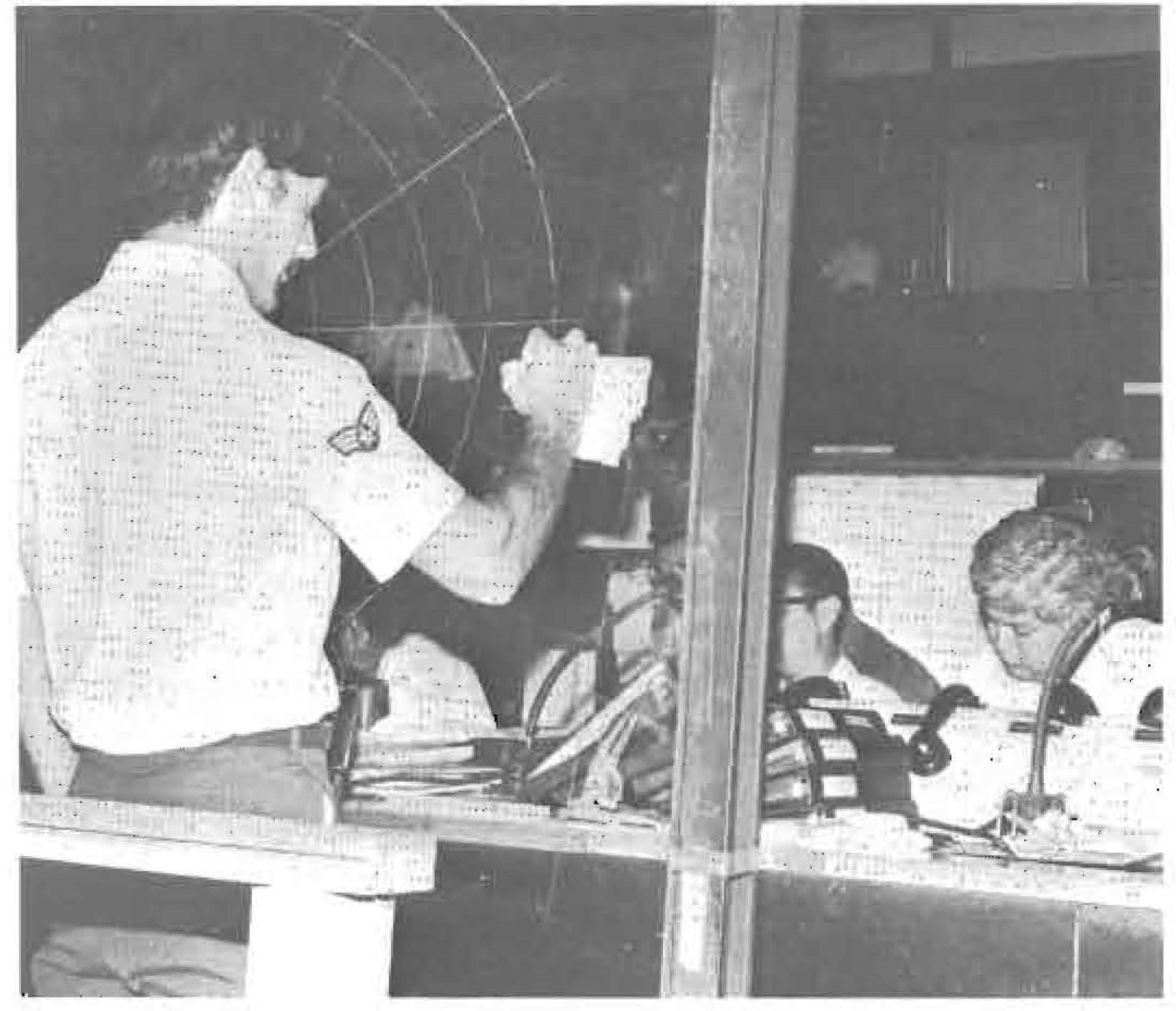
Pacific Air Forces continued to engage HANG units (150th and 169th Aircraft Control and Warning Squadrons and the 201st Combt Communications Group) in active Air Force roles in the Pacific area.
– 1977 Annual Report pp. 14
169th Aircraft Control and Warning Squadron
The 169th ACW Sq completed its twentieth year of operation in the HADS and continued to maintain a high state of air defense readiness from its Mount Kaala AFS/Wheeler AFB complex. Highlights of the year were the collocation of the 326th AD’s air defense direction center (ADDC) within the unit’s facility and the passing of a MEl conducted by the inspector general, PACAF.
In October 1976, the 326th AD’s ADCC was relocated within the 169th ACW Sq’s ADDC. With collocation , the 169th ACW Sq took on the additional responsibility of displaying all air defense data required by ADDC operation.
From Dec. 3-6, 1976, the IG, PACAF team conducted a MEl of the 169th ACW Sq. The team cited no finding and gave the unit a satisfactory rating .
Operational activity during FY 77 inc luded the detection of 48,169 aircraft and conducting 3,309 intercepts. There were seven actual unknowns which required intercept for identification purposes. Additionall y, 8 aircraft were gi ven emergency assistance; 4 were given navigational assistance; and 376 were provided radar flight following assistance.
During the year, seven air defense exercises were conducted to maintain proficiency. Of these, one was a jOint task force exercise; another was an expanded air defense exercise; three were system air defense exercises; and two were control phase exercises. There was also an alert force capability test. In addition, 88 system training missions (synthetic target exercises) were performed to supplement unit and system air defense proficiency training
The 169th ACW Sq also continued to assist other service organizations. LtCoi. Norman G. E Chang, CMSgt. Richard K. Senaha and SMSgt. Deogracias Agbayani, Jr. augmented the IG, PACAF team in its inspection of a USAF unit in the Philippines. Unit personnel also augmented a Washington ANG unit in Brave Shield. LtCol. Herbert K. Nemoto and Maj. Paul H. Hashimoto participated as evaluators for Team Spirit in Korea. Pearl Harbor-based Navy intercept controllers continued to use the AD DC control scopes on a weekly basis to maintain their intercept proficiency. They conducted 907 training intercepts in this manner. The ADDC further provided intercept control and flight following for Kaneohe-based Marine F-4J attack aircraft Unit weapons controllers conducted a total of 167 intercepts. The ADDC again supported Rim-of-the-Pacific 77 , a multi-nation naval exercise conducted by the U.S. Navy.
Additionally , C-E maintenance training was provided to PACAF personnel enroute to new duty stations in Korea. AN/GPA-122 coder-decoder equipment classes were conducted during July 1976 and February 1977 by TSgts. Daniel Y. Komatsu and Harold 1. Tasaka. Familiarization training was also given to a maintenance officer enroute to a USAF unit in the Philippines
Unit weapons controllers and technicians participated in Cope Elite from Sept. 10 – Dec. 2, 1976, Feb. 10 – April 30, 1977, and May 2-29, 1977. This is a joint-services exercise and is conducted in support of the U.S Army’s Opportune Journey. The 169th ACW Sq performed the role of a control and reporting center within a tactical air control system. Tactical fighter aircraft deployed at Barbers Point Naval Air Station were provided radar control to and from the Pohakuloa Training Area. The exercise provided Hawaii-based U. S. Army units with realistic close air support training. The ADDC also provided these attack aircraft with 155 training intercepts.
– 1977 Annual Report pp. 18-19
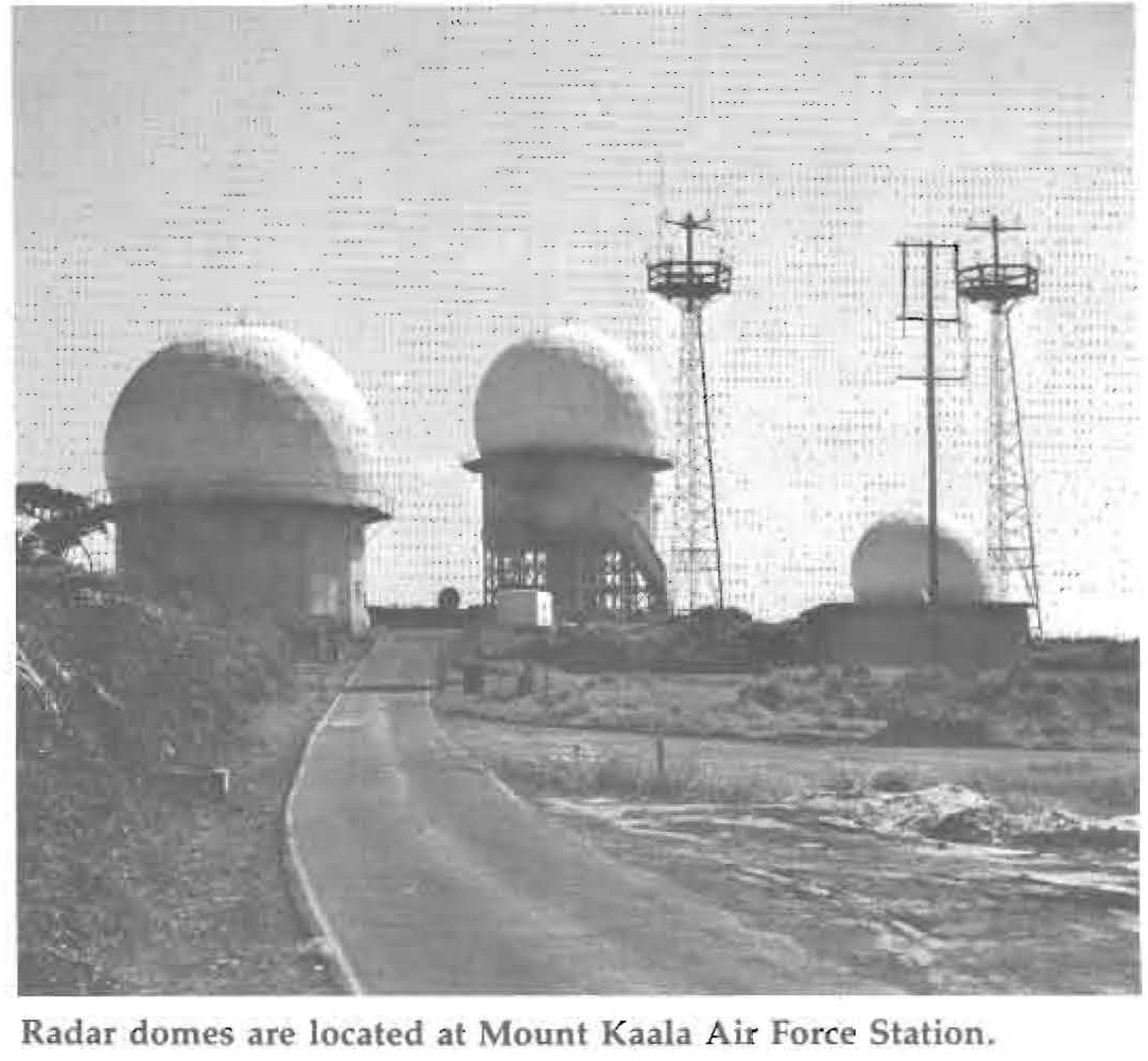
An Air Force depot maintenance team replaced the hydraulic antenna system in the height finder radar at the 150th and 169th Aircraft Control and Warning Squadrons with a mechanical antenna system which has improved the overall reliability and maintainability of the system
– 1978 Annual Report pp. 15
169TH AIRCRAFT CONTROL AND WARNING SQUADRON
The 169th Aircraft Control and Warning Squadron continued to maintain a high state of air defense readiness from its Mount Kala Air Force Station/Wheeler Air Force Base compI The w1it maintained and operated search and height finder radars and air-to-ground radios atop Mount Kaala and conducted operational, administrative and support functions at Wheeler Air Force Base .
The sq uadron received an outstanding rating from the inspector general, Pacific Air Forces, for performance exhibited during the September 1977 operational readiness inspection. This was the first such achievement in the unit’s 21-year history.
In June 1978, the unit underwent a management effectiveness inspection by the inspector general, Pacific Air Forces, and was rated satisfactory.
Opera tional acti vity d urin g the fiscal year included detecting 48,884 aircraft and con ducting 4,375 intercepts. There were eight actual “unknowns” which required intercepts for identification. Additionally, 6 aircraft were given emergency assistance and 283 were provided radar flight-following assistance.
Eight air defense exercis2s were conducted during the year for system air defense proficiency training. These included a joint task force exercise, an expanded air defense exercise, fou r system air defense exercises an d two control phase exercises. A unit level air defense exercise and an alert force capability test were also performed . In addition, 103 system training missions (synthetic target exercises) were conducted to supplement unit and system air defen se p roficiency training.
The 169th Aircraft Control and Warning Squadron continued to assist other service organizations with p ersonnel and facility support. In November 1977, Major Steven T. Oka and Technical Sergean t Seiichi Tsutsui augmented the Pacific Air Forces’ inspector general team- in its inspection of Air Force units in the Republi c of Korea. Lieutenant Colonel Nelson T. Moriwaki and Captain Eric S. Kanja assisted another Pacific Air Forces’ inspection team during February 1978 in evaluatmg an Air Force unit in the Republic of the Philippines. In March 1978, Major Walter O. Watanabe and Technical Sergeant Robert M. Suzui participated in exercise Team Spirit in Korea.
The unit’s air defense direction center participated in Rimof-the-Pacific 78, a multi-nation exercise conducted by the Navy during April 1978. It also provided intercept control and flight following for Kaneohe- based Marines F-4J attack aircraft. Unit air weapons controllers conducted 185 intercepts with these Marine aircraft. Navy air inter ep t controllers from Pearl Harbor continued to use the unit’s control scopes and associa ted equipment in the air defense d irection center on a weekly basis to maintain their intercept proficiency. They conducted 1,359 training intercepts in this manner.
Commun ications-electronics mai ntenance instructional training, which included classroom and on-the-job training, was provid ed to three Pacific Air Forces’ airmen en route to new duty stations in Korea. These train ing sessions on the coderdecoder were conducted from July to September 1977 by Techmcal Sergeant Harold T. Tasaka.
Ad ditionally, the unit’s air weapons controllers and technician s participated in exercise Cope Elite during selected periods from October 1977 to June 1978. The purpose of Cope Elite, a joint service exercise in support of the Army’s Opportune Journey series of ground exercises, is to provide realistic and well-coordina ted close air support training for all participants. The 169th Aircraft Con trol and Warning Squadron performed the role of a control and reporting center within a tactical air control system. Participating tactical fighter aircraft, deployed at Barbers Point Naval Air Station, were provided radar control to and from the Pohakuloa Training Area on the island of Hawaii. The deployed aircrews were also given tactical intercept and air-to-air refueling training. The un it’s air defense direction center conducted 912 training intercepts for these attack aircraft.
– 1978 Annual Report pp. 17-18
The 150th Aircraft Control and Warning Squadron (Fixed) and 169th Aircraft Control and Warning Squadron (Fixed) were made subordinate units of the 154th CompoSite Group effective January 1, 1979.
–1979 Annual Report pp. 9
The 169th Aircraft Control and Warning Squadron completed its 22nd year of operation in the Hawaii Air Defense System. The squadron received an outstanding rating from the Inspector General, Pacific Air Forces, for performance exhibited during the operational readiness inspection. This was the second consecutive year in which such a rating was achieved by the unit.
Unit personnel participated in the two western Pacific deployments with other members of the 154th Composite Group.
Operational activity during Fiscal Year 1979 included the detection of 49,543 aircraft and conducting 4,484 ground controlled intercepts. The air defense direction center was required to intercept, for identification purposes, five actual unknowns. Additionally, seven aircraft were given emergency assistance and 255 were provided radar flight-following assistance.
Five air defense exercises were conducted during the year for system air defense proficiency training. In addition, 107 system training missions (synthetic target exercises) were performed to supplement unit and system air defense proficiency training.
The 169th Aircraft Control and Warning Squadron continued to assist other armed services with personnel and facility support. Squadron personnel were called upon to augment the Pacific Air Forces’ Inspector General team during the inspections of Air Force units in the Republic of South Korea (November, 1978) and the Republic of the Philippines (June, 1979) .
Pearl Harbor-based Navy air intercept controllers continued to use the air defense direction center’s control scopes and supporting equipment on a weekly basis to maintain their intercept proficiency. The air defense direction center further provided intercept control and flight following for Kaneohebased Marine F-4J and F-4S attack aircraft.
The Air Defense Direction Center also provided significant radar weather positions to the United States Weather Service throughout the year, which included the tracking and reporting of Hurricane Fico during July, 1978.
Additionally, the unit’s air weapons controllers and technicians participated in exercise Cope Elite in the role of a control and reporting center within a tactical air control system. Participating tactical fighter aircraft, deployed at Barbers Point Naval Air Station, were provided radar control and flight monitoring to and from the Pohakuloa Training Area on the island of Hawaii. The deployed aircrews also were given tactical intercept and air-to-air refueling training.
– 1979 Annual Report pp. 11-12
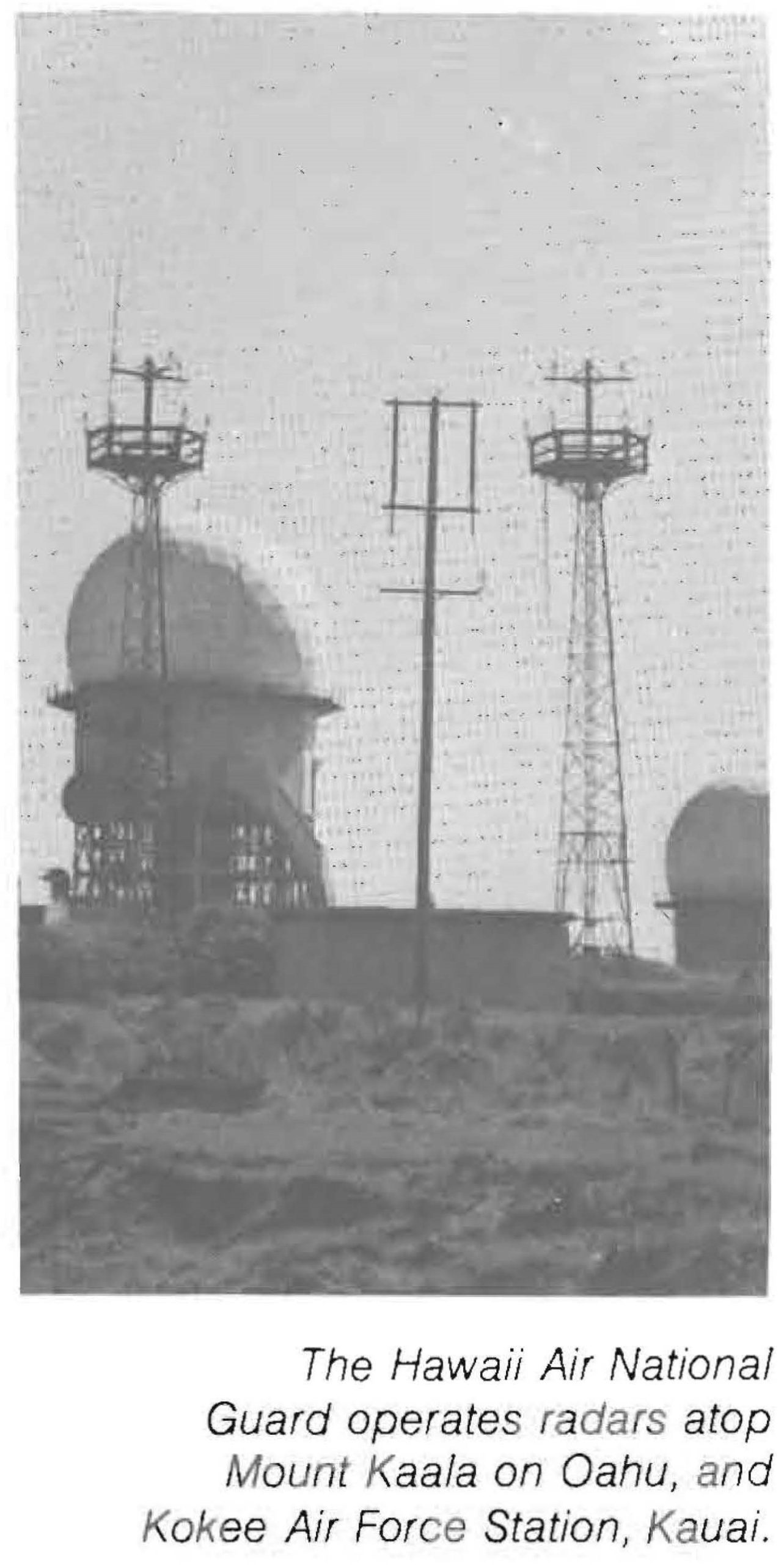
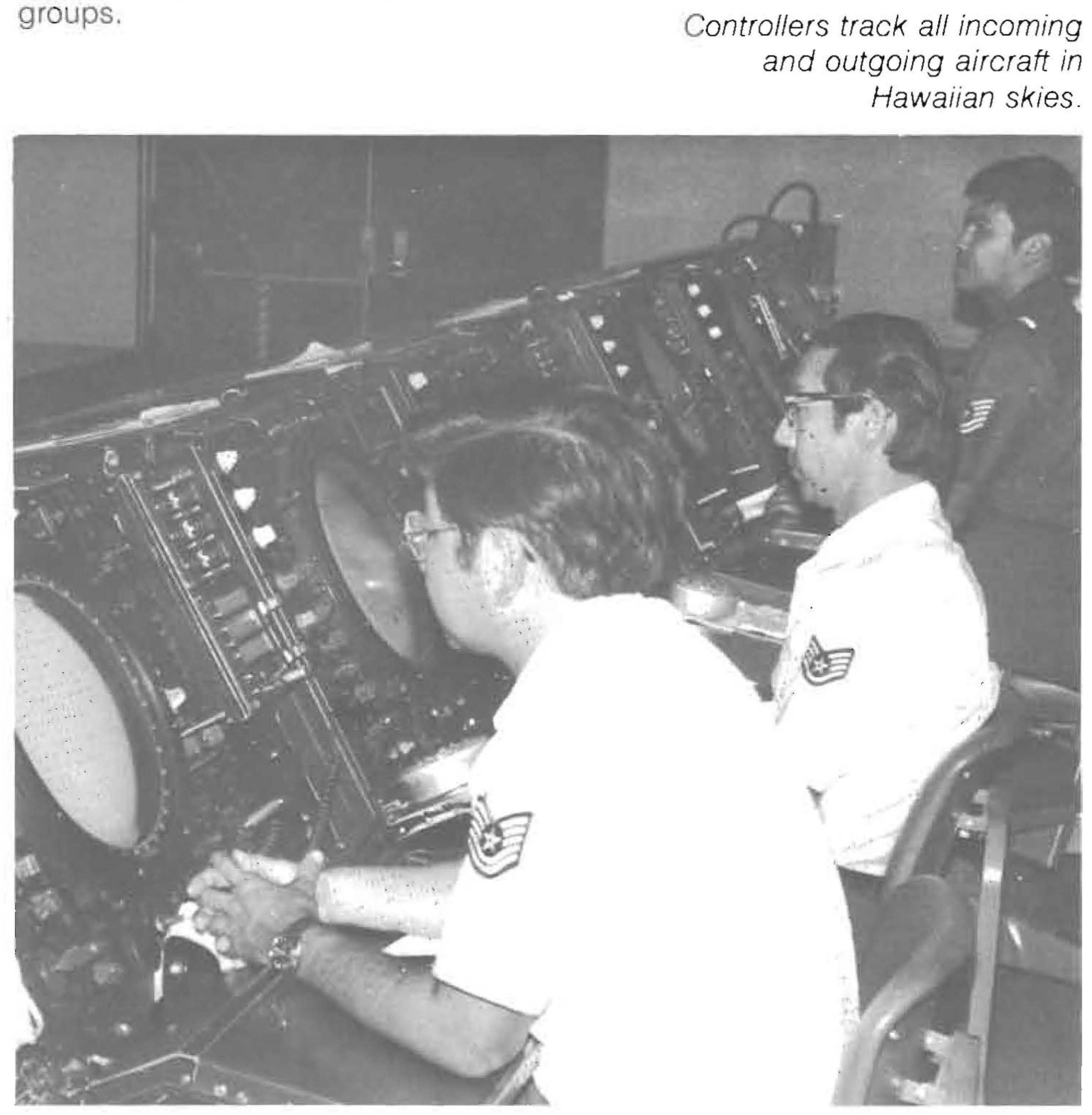
The 169th Aircraft Control and Warning Squadron, Wheeler Air Force Base, was selected as the Hawaii Air National Guard’s outstanding unit of 1979. The squadron, along with the 150th Aircraft Control and Warning Squadron on Kaual, provides the air defense radar network for Hawaii.
The National Guard Association of the United States presented the 169th Aircraft Control and Warning Squadron with its distinguished communications, electronics, and meteorology unit award for exceptional accomplishments during 1979.
The 150th Aircraft Control and Warning Squadron, Kauai counterpart of the 169th, completed its 19th year of operations. The unit, based at Kokee, maintained constant surveillance of Hawaii’s western sector, venturing into new training programs to keep pace with its air defense mission.
Squadron personnel plotted over 30,000 aircraft, conducted nearly 5,000 training intercepts, and provided navigational and in-flight emergency assistance. Live and simulated air defense training sessions gave unit members a realistic idea of their roles in the event of an air attack on the state
– 1980 Annual Report pp. 10
The 169th Aircraft Control and Warning Squadron, located at Wheeler Air Force Base, and the 150th Aircraft Control and Warning Squadron, at Kokee Air Force Station on Kauai, maintained constant radar surveillance of Hawaii’s skies. Live and simulated air defense exercises provided members of the Group with realistic training on what their roles would be in the event of an air attack on the State.
– 1981 Annual Report pp. 10

A major milestone occurred when the Hawaii Regional Operations Control Center (1 UROCC) of lhe 169th Aircraft Control and \ arning Squadron was declared fully operational. This event culminated months of planning, construction and training of personnel to assume duties associated with the fully automated direction center and thereby greatly increased the mission capability of the Hawaii Air National Guard
– 1984 Annual Report pp. 12
Although the conversion received the most visibility, members of the 150th and 169th Aircraft Control and Warning Squadrons demonstrated their skill and professionalism by receiving high ratings from the Pacific Air Forces inspectors. Both squadrons were inspected in November 1986 for operational readiness and unit effectiveness.
– 1987 Annual Report pp. 11
The 154th SVF sent personnel on deployment to Kulis ANGB, Alaska, for training in June. Accompanying them were personnel from the 169th Aircraft Control and Warning Squadron and the 154th Mission Support Squadron
– 1992 Annual Report pp. 13
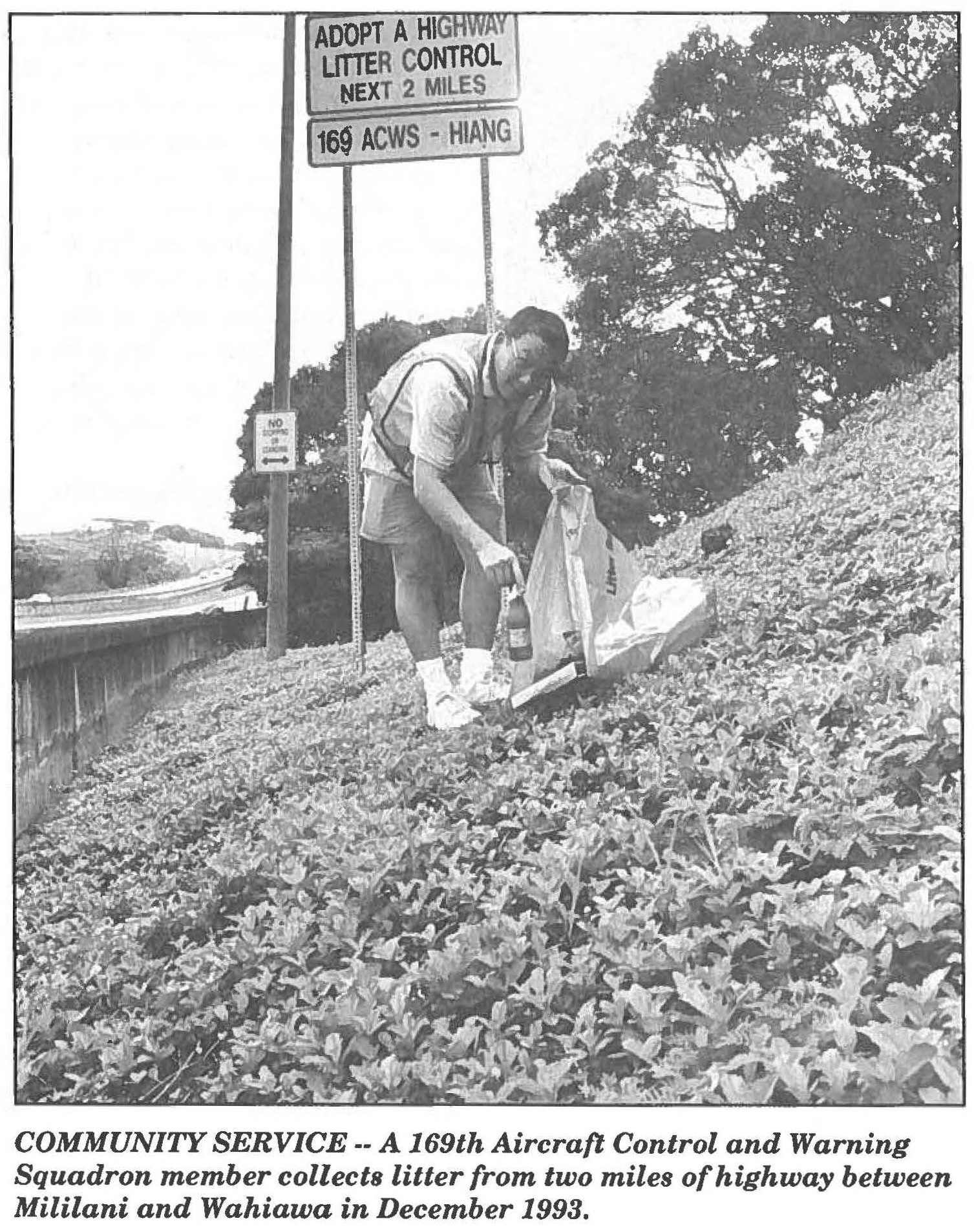
In October 1993, several members of the 169th Aircraft Control and Warning Squadron (ACWS) deployed to Elmendorf AFB, Alaska, for Amalgam Warrior exercises.
– 1994 Annual Report pp. 18
Planning is underway for the 154th Wing and the 169th Aircraft Control & Warning Squadron (169 ACWS) to take on responsibilities of the 10th Air Defense Squadron in support of that mission.
– 1996 Annual Report pp. 16
Also that month, members from the 169th Aircraft Control and Warning Squadron (169 ACWS) participated in the first ever “Top Scope ’96,” a multi-regional “Top Gun” air defense competition. . .
From May 20 to June 28, 1996, members of the 169th ACWS, 199 FS, 203 ARS and 201st CCG participated in “RIMPAC ’96” exercises with other U.S. military and multinational forces.
– 1996 Annual Report pp. 19
In July 1996, 201 st personnel deployed to Australia to support Air Force flying units in Exercise PITCH BLACK 96. Also that month, KC135 aircraft from the 203rd Air Refueling Squadron and maintenance support crews from the 154th Logistics Group deployed to Eielson Air Force Base, while controllers from the 169th Aircraft Control and Warning Squadron deployed to Elmendorf AFB, Alaska for Exercise COPE THUNDER.
– 1997 Annual Report pp. 16
In the Hawaii Air National Guard, the 169th Aircraft Control and Warning Squadron, Wheeler AAF, and the 154th Operations Support Flight, Hickam AFB, were robusted to absorb additional air defense mission duties. The 150th Aircraft Control and Warning Squadron, Kokee AFS, was downsized. Full-time resources from the 150th were moved to support the 169th and 154th. The net effect of robusting and downsizing within HIANG is negligible.
– 1997 Annual Report pp.39
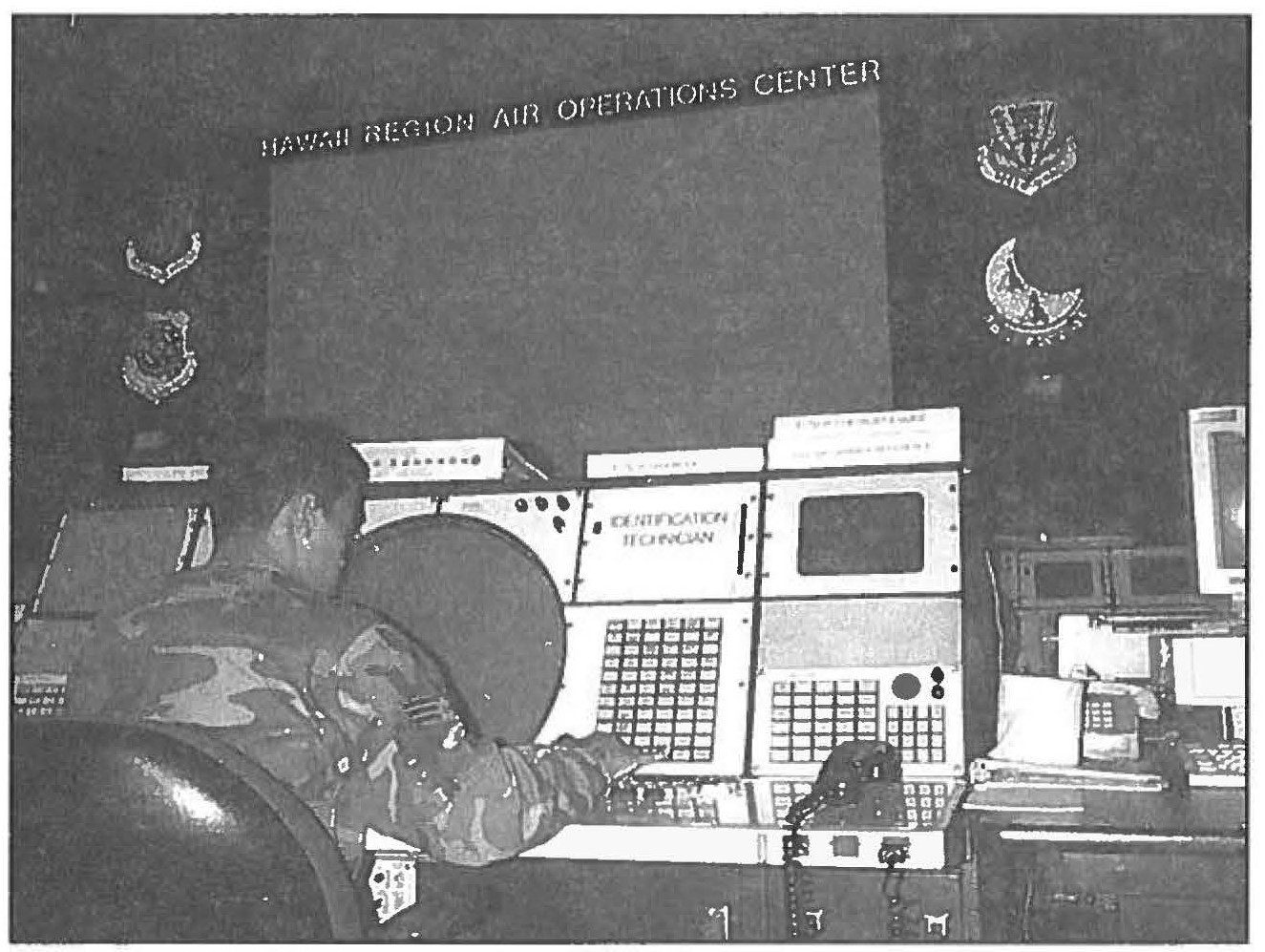
The Wing’s 169th Aircraft Control and Warning Squadron operates the radar at Mount Kaala, Oahu. The radar is linked to the Hawaii Regional Operations Control Center (HIROCC) at Wheeler Army Airfield, Oahu, and provides 24-hour surveillance of the entire Hawaiian Island chain.
– 1998 Annual Report pp. 14
The Wing’s 169th Aircraft Control and Warning Squadron operates a radar site at Mount Kaala, Oahu, and the 150th Aircraft Control and Warning Flight operates a radar site at Kokee Air, Force Station, Kauai. These radar sites are linked to the Hawaii Region Air Operations Center (HIRAOC) at Wheeler Army Airfield, Oahu, where 24-houi air surveillance of the Hawaiian island chain is provided
– 1999 Annual Report pp. 17
The Wing’s 169th Aircraft Control and Warning Squadron operates a radar site at Mount Kaala, Oahu, and the 150th Aircraft Control and Warning Flight operates a radar site at Kokee Air Force Station, Kauai. These radar sites are linked to the Hawaii Region Air Operations Center (HIRAOC) at Wheeler Army Airfield, Oahu, where 24-hour air surveillance of the Hawaiian island chain is provided.
– 2000 Annual Report pp. 15
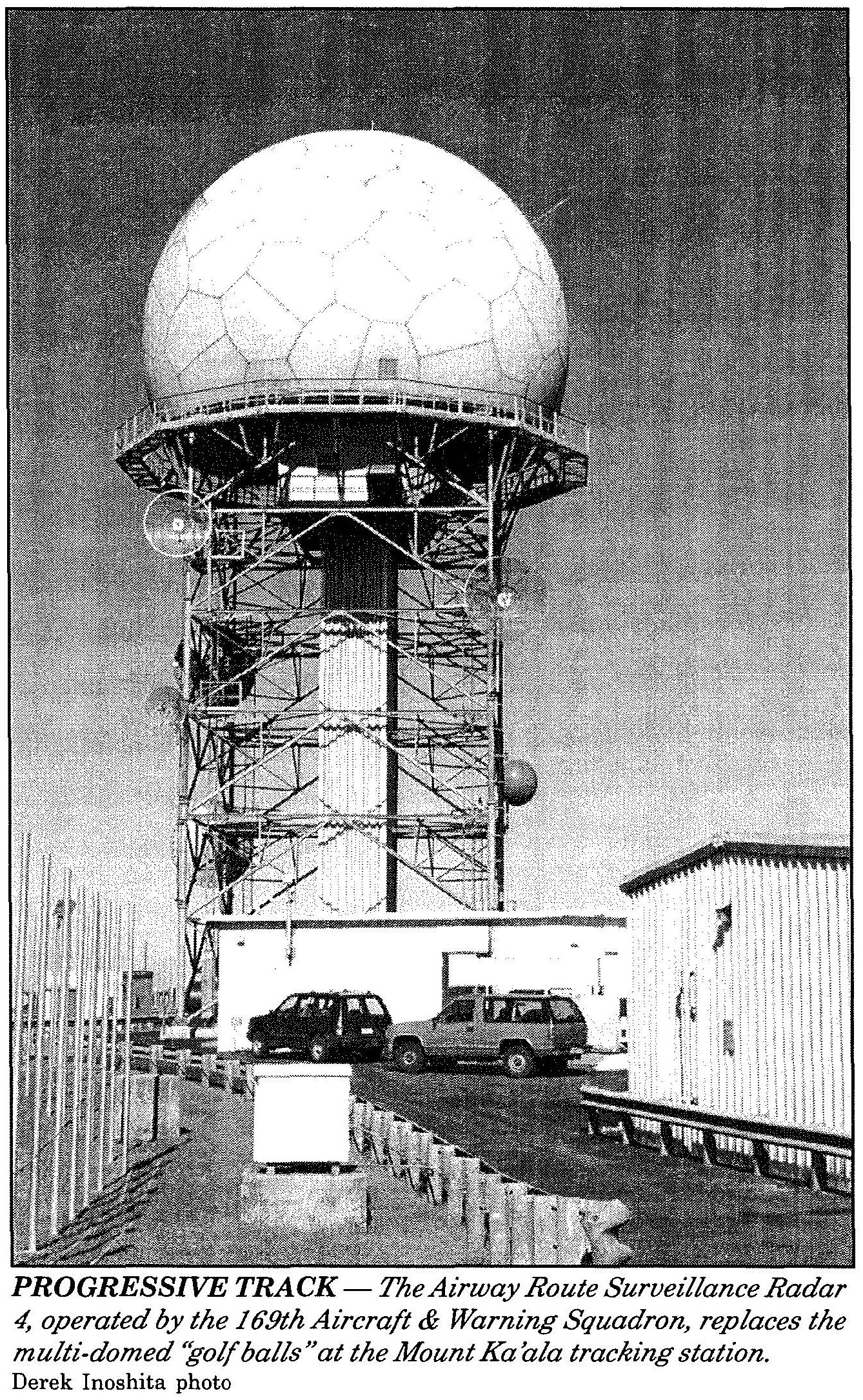
The Wing’s 169th Aircraft Control and Warning Squadron operates a radar site at Mount Kaala, Oahu, and the 150th Aircraft Control and Warning Flight operates a radar site at Kokee Air Force Station, Kauai. These radar sites are linked to the Hawaii Region AirOperations Center (HIRAOC) at Wheeler Army Airfield, Oahu, where 24-hour air surveillance of the Hawaiian island chain is provided.
– 2001 Annual Report pp. 15-16
COPE CAGE & COPE CHOW (6) – 169th Aircraft Control and Warning Squadron, main player – live-fly or simulated air defense exercise in battle management coordination, air weapons control, and air defense surveillance for the state of Hawaii
– 2001 Annual Report pp. 18
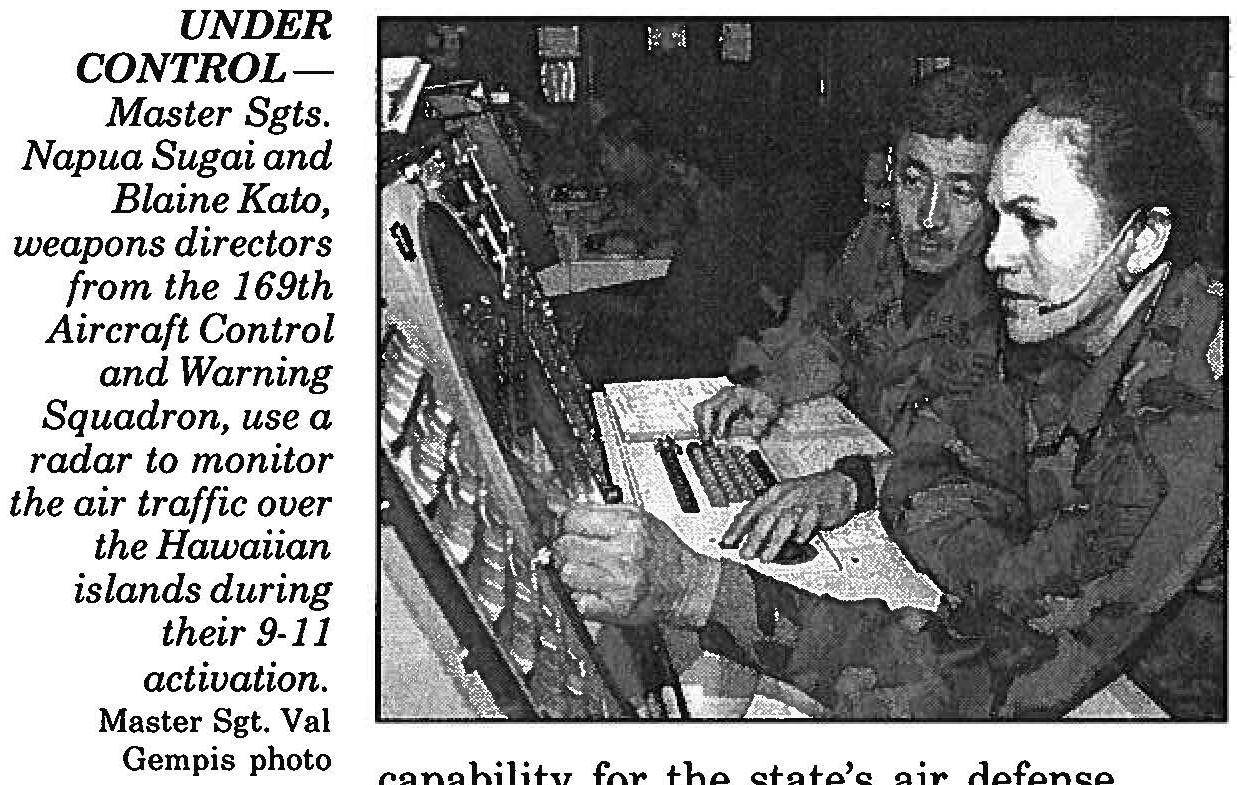
The Wing’s 169th Aircraft Control and Warning Squadron operates a radar site at Mount Kaala, Oahu, and the 150th Aircraft Control and Warning Flight operates a radar site at Kokee Air Force Station, Kauai. These radar sites are linked to the Hawaii Region Air Operations Center (HIRAOC) at Wheeler Army Airfield, Oahu, where 24-hour air surveillance of the Hawaiian island chain is provided.
– 2002 Annual Report pp. 12
In the days after Sept. 11th, the F-15 alert posture was increased and Hawaii Air National Guard KC-135 aircraft were also placed on alert status to provide continuous coverage, protecting Hawaii’s airspace. Around the clock airspace surveillance was provided by the 169th Aircraft Control and Warning Squadron.
– 2002 Annual Report pp. 13-14
On Oct. 1st, the first Hawaii Air National Guard unit was mobilized for Operation NOBLE EAGLE. The 169th Aircraft Control and Warning Squadron at Wheeler Army Airfield was placed on federal active duty, coming under the direct operational control of Pacific Air Forces (PACAF)
– 2002 Annual Report pp. 14
The Wing’s 169th Aircraft Control and Warning Squadron operates a radar site at Mount Kaala, Oahu, and the 150th Aircraft
– 2003 Annual Report pp. 13
Control and Warning Flight operates a radar site at Kokee Air Force Station, Kauai. These radar sites are linked to the Hawaii Region Air Operations Center (HIRAOC) at Wheeler Army Airfield, Oahu, where 24-hour air surveillance of the Hawaiian island chain is provided.
The Wing’s 169th Aircraft Control and Warning Squadron operates a radar site at Mount Kaala, Oahu and the 150th Aircraft Control and
– 2004 Annual Report pp. 15
Warning Flight operates a radar site at Kokee Air Force Station, Kauai. These radar sites are linked to the Hawaii Region Air Operations Center (HIRAOC) at Wheeler Army Airfield, Oahu. where 24-hour air surveillance of the Hawaiian island chain is provided
The Wing’s 169th Aircraft Control and Warning Squadron operates a radar site at Mount Kaala, Oahu, and the 150th Aircraft Control and Warning Flight operates a radar site at Kokee Air Force Station, Kauai. These radar sites are linked to the Hawaii Region Air Operations Center (HIRAOC) at Wheeler Army Airfield, Oahu, where 24-hour air surveillance of the Hawaiian island chain is provided.
– 2005 Annual Report pp. 14
Air defense system upgrade
The 169th Aircraft Control and Warning Squadron also underwent some changes. One of the most significant changes was the departure of the old air defense system. The AN/FYQ93 was shutdown after 22 years during a termination sequence May 19, 2006. The Battle Control System-Fixed was put in its place with its open architecture design to allow the Hawaii Air Defense system to expand and grow to meet emerging threats to our homeland security
– 2006 Annual Report pp. 15
The Wing’s 169th Aircraft Control and Warning Squadron operates a radar site at Mount Kaala, Oahu, and the 150th Aircraft Control and Warning Flight operates a radar site at Kokee Air Force Station, Kauai. These radar sites are linked to the Hawaii Regional Air Operations Center (HIRAOC) at Wheeler Army Airfield, Oahu, where 24-hour air surveillance of the Hawaiian island chain is provided.
– 2006 Annual Report pp. 17
The Wing’s 169th Aircraft Control and Warning Squadron operates radar sites at Mount Kaala, Oahu, and at Kokee Air Force Station, Kauai. These radar sites are linked to the Hawaii Regional Air Operations Center at Wheeler Army Airfield, Oahu, where 24-hour air surveillance of the Hawaiian island chain is provided. In July 2007, the 169th Aircraft Control and Warning Squadron got a new member to the team as the 150th Aircraft Control and Warning Flight deactivated its flag, but not its mission, becoming an operating location of the 169th.
– 2007 Annual Report pp. 15
The Wing’s 169th Aircraft Control and Warning Squadron operates radar sites at Mount Kaala, Oahu, and at Kokee Air Force Station, Kauai. These radar sites are linked to the Hawaii Regional Air Operations Center at Wheeler Army Airfield, Oahu, where 24-hour air surveillance of the Hawaiian island chain is provided.
– 2008 Annual Report pp. 16
The Wing’s 169th Aircraft Control and Warning Squadron operates radar sites at Mount Kaala, Oahu, and at Kokee Air Force Station, Kauai. These radar sites are linked to the Hawaii Regional Air Operations Center at Wheeler Army Airfield, Oahu, where 24-hour air surveillance of the Hawaiian island chain is provided
– 2010 Annual Report pp. 15
The 169th Aircraft Control and Warning Squadron, for the first time implemented the Presidential air defense protection plan in support of a presidential visit to Hawaii, while the 203rd Air Refueling Squadron provided aerial refueling services to support aircraft.
– 2010 Annual Report pp. 18
The wing’s 169th Aircraft Control and Warning Squadron operates radar sites at Mount Kaala, Oahu, and at Kokee Air Force Station, Kauai. These radar sites are linked to the Hawaii Regional Air Operations Center at Wheeler Army Airfield, Oahu, where 24-hour air surveillance of the Hawaiian island chain is provided.
– 2011 Annual Report pp. 14
The wing’s 169th Aircraft Control and Warning Squadron operates radar sites at Mount Kaala, Oahu, and at Kokee Air Force Station, Kauai. These radar sites are linked to the Hawaii Regional Air Operations Center at Wheeler Army Airfield, Oahu, where 24-hour air surveillance of the Hawaiian island chain is provided.
– 2012 Annual Report pp. 14
The 169th Aircraft Control & Warning Squadron (ACWS) worked closely with the USSS, dedicated to the 24/7 Airspace Security Protection Mission of the President. A few weeks later, the 169th ACWS again worked with the USSS in the Hawaii Region Air Operations Center (HIRAOC), successfully executing Joint Task Force – President of the United States visit during the Christmas and New Year’s holidays without incident.
– 2012 Annual Report pp. 17
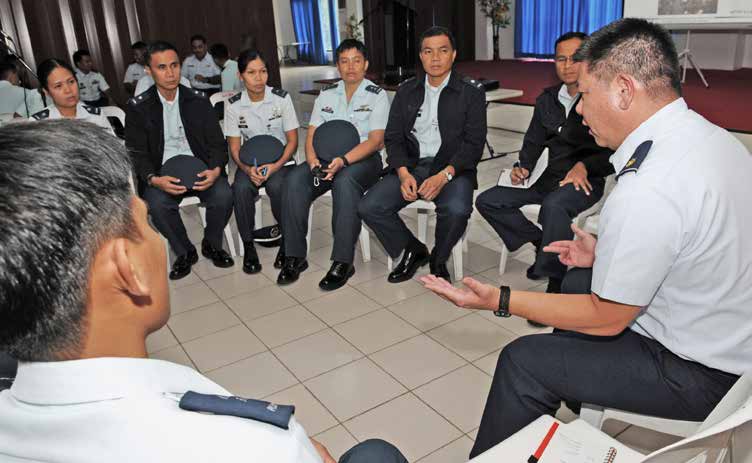
The 154th Operations Group consists of the 199th Fighter Squadron, 203rd Air Refueling Squadron, 204th Airlift Squadron, 169th Aircraft Control and Warning Squadron, and the 154th Operations Support Squadron and the 297th Air Traffic Control Squadron.
– 2013 Annual Report pp. 16
The wing’s 169th Aircraft Control and Warning Squadron operates radar sites at Mount Kaala, Oahu, and at Kokee Air Force Station, Kauai. These radar sites are linked to the Hawaii Regional Air Operations Center at Wheeler Army Airfield, Oahu, where 24-hour air surveillance of the Hawaiian island chain is provided
– 2013 Annual Report pp. 17
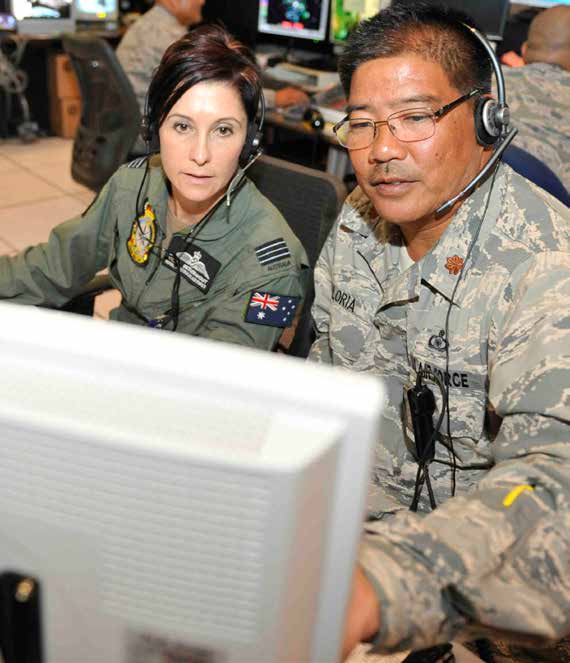
The 154th Operations Group consists of the 199th Fighter Squadron, 203rd Air Refueling Squadron, 204th Airlift Squadron, 169th Air Defense Squadron, the 154th Operations Support Squadron, 297th Air Traffic Control Squadron and the 201st Intelligence Squadron
– 2014 Annual Report pp. 17
The wing’s 169th Air Defense Squadron operates radar sites at Mount Kaala, Oahu, and at Kokee Air Force Station, Kauai. These radar sites are linked to the Hawaii Regional Air Operations Center at Wheeler Army Airfield, Oahu, where 24-hour air surveillance of the Hawaiian island chain is provided
– 2014 Annual Report pp. 18
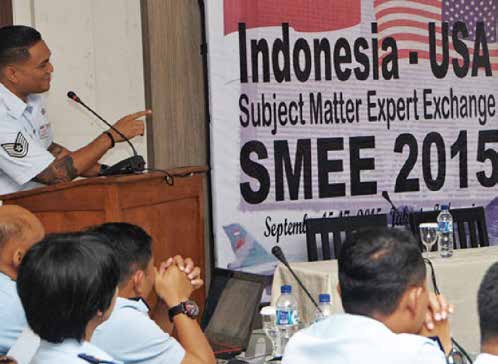
The 154th Operations Group consists of the 199th Fighter Squadron, 203rd Air Refueling Squadron, 204th Airlift Squadron, 169th Air Defense Squadron, 154th Operations Support Squadron, 297th Air Traffic Control Squadron and the 201st Intelligence Squadron.
– 2015 Annual Report pp. 16
The wing’s 169th Air Defense Squadron operates radar sites at Mount Kaala, Oahu, and at Kokee Air Force Station, Kauai. These radar sites are linked to the Hawaii Regional Air Operations Center at Wheeler Army Airfield, Oahu, where 24-hour air surveillance of the Hawaiian island chain is provided.
– 2015 Annual Report pp. 16
Tech Sgt. Alison Bruce-Maldonado)
The 154th Operations Group consists of the 199th Fighter Squadron, 203rd Air Refueling Squadron, 204th Airlift Squadron, 169th Air Defense Squadron, 154th Operations Support Squadron, 297th Air Traffic Control Squadron and the 201st Intelligence Squadron.
– 2019 Annual Report pp.18
The wing’s 169th Air Defense Squadron operates radar sites at Mount Kaala, Oahu, and at Kokee Air Force Station, Kaua‘i. These radar sites are linked to the Hawai‘i Regional Air Operations Center at Wheeler Army Airfield, Oahu, where 24-hour air surveillance of the Hawaiian island chain is provided.
– 2019 Annual Report pp.19
The 298th ADG’s subordinate units are the 169th Air Defense Squadron, the 298th Support Squadron, and the 298th Support Squadron Operating Location A.
– 2019 Annual Report pp.20
The 154th Operations Group consists of the 199th Fighter Squadron, 203rd Air Refueling Squadron, 204th Airlift Squadron, 169th Air Defense Squadron, 154th Operations Support Squadron, 297th Air Traffic Control Squadron, 199th Weather Flight, and the 201st Intelligence Squadron.
– 2020 Annual Report pp. 18
The 298th ADG’s subordinate units are the 169th Air Defense Squadron, the 298th Support Squadron, and the 298th Support Squadron Operating Location A. The group’s 169th Air Defense Squadron operates radar sites at Mount Ka‘ala on O‘ahu and Koke‘e Air Force Station on Kaua‘i These radar sites are linked to the Hawai‘i Regional Air Operations Center at Wheeler Army Airfield where 24-hour air surveillance of the Hawaiian island chain is provided.
Highlights
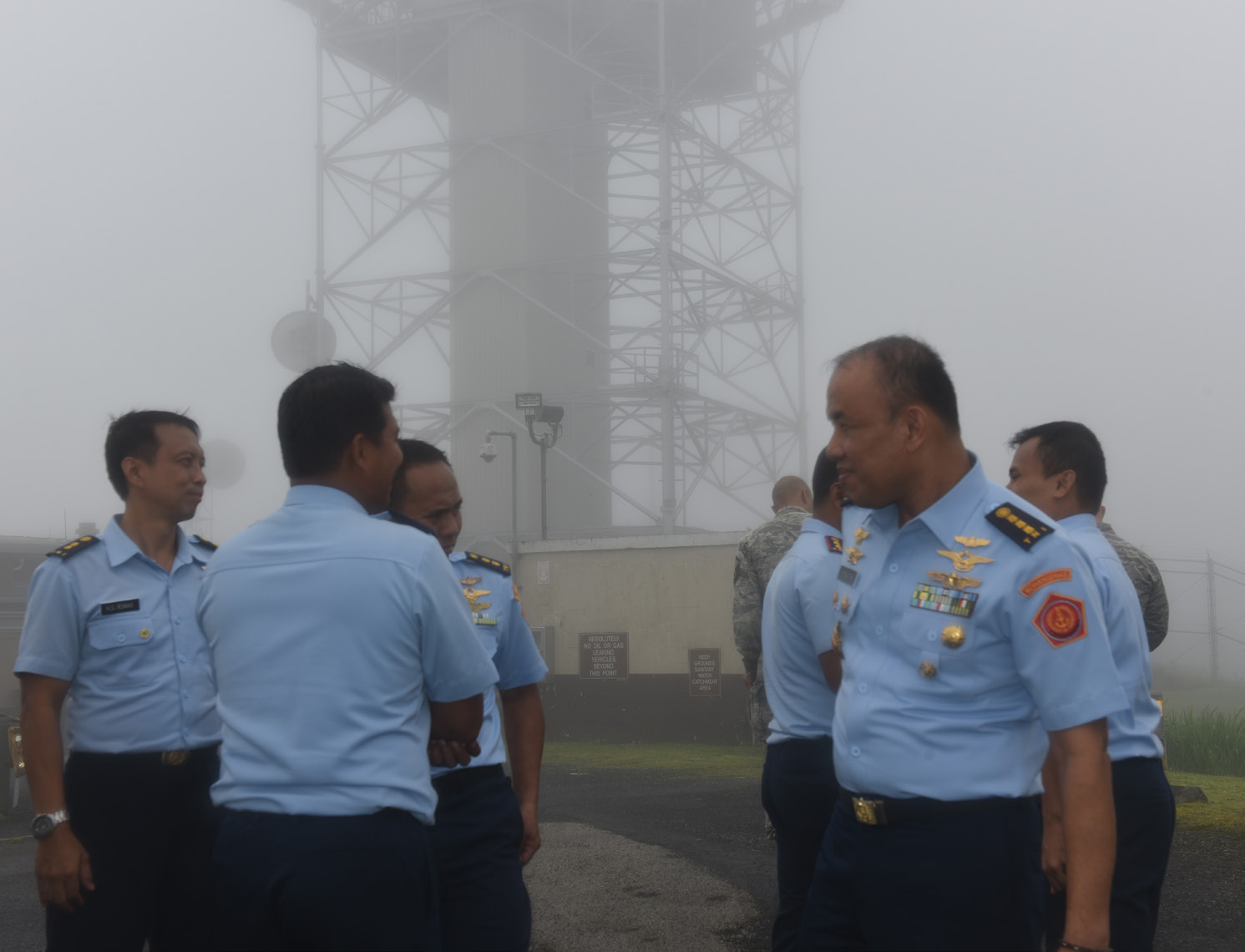
Six HIANG Guardsmen participated in a State Partnership Program (SPP) Air Defense subject matter expert exchange (SMEE) July 10, 2019, in Yogyakarta, Indonesia. The SPP SMEE began in late June on the island of O‘ahu, when members of the HIANG’s 169th Air Defense Squadron hosted their Indonesian Air Force (TNI) counterparts. The SMEE in Yogyakarta included tabletop discussions and questionand-answer sessions on the challenges with drones and GCI procedures, as well as the HING and TNI organizational structures. There was also a visit to the TNI Air training Wing and the 215th Wing radar tower
– 2020 Annual Report pp. 20
On Aug. 3rd, 2019, the HIANG activated the 298th Air Defense Group and the 298th Support Squadron, and reassigned the 169th Air Defense Squadron to the 298th Air Defense Group to better align its organizational structure with other Air Force organizations.
– 2020 Annual Report pp. 21
The 298th ADG, to include its two squadrons, the 169th Air Defense Squadron and the 298th Support Squadron protect Hawai‘i’s skies 24 hours a day, 7 days a week.
– 2024 Annual Report pp. 34
The 298th ADG’s subordinate units are the 169th Air Defense Squadron, the 298th Support Squadron, and the 298th Support Squadron Operating Location A.
– 2025 Annual Report pp. 44
FY 1965 – FY 1975 Lt Colonel Kiyoshi P. Goya
Feb. 1, 1976 – FY 1985 Lt. Col. Donald M. O’Day
FY 1986 – FY 1987 Lt. Col. Norman G.E. Chang
FY 1988 – FY 1992 Lt. Col. Steven T. Oka
FY 1993 – FY 1995 Lt. Col. Melvin K. Matsui
FY 1996 – FY 1999 Lt. Col. Jerry Bona
FY 2003 – FY 2006 Lt. Col. Dewey D.A. Arakawa
FY 2007 – FY 2008 Lt. Col. Scott W. Hoadley
FY 2009 – FY 2012 Lt. Col. Dennis K. Matsuura
FY 2013 – FY 2015 Lt. Col. Craig N. Tsutsui
FY 2019 – FY 2020 Lt. Col. Daniel C. Wrazien
FY 2024 – FY 2025 Lt. Col. Michael Buendia
Legal Disclaimer:
EIN Presswire provides this news content "as is" without warranty of any kind. We do not accept any responsibility or liability for the accuracy, content, images, videos, licenses, completeness, legality, or reliability of the information contained in this article. If you have any complaints or copyright issues related to this article, kindly contact the author above.
